

Themes and Motifs
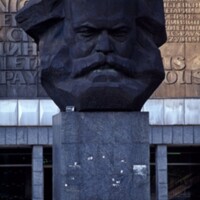
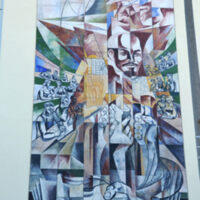
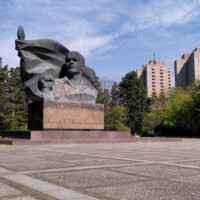
Communist Leaders
The SED commissioned art of famous Communists leaders like Karl Marx, Vladimir Lenin and Ernst Thalmann. All three men died before the GDR was founded. Monuments of Stalin in the Soviet Bloc were removed as part of Nikita Khrushchev's de-Stalinization efforts that began in 1956. In addition, there are no public monuments to Walter Ulbricht, Leonid Brezhnev, or Erich Honecker.
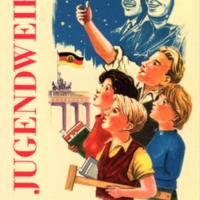
Secular Humanism
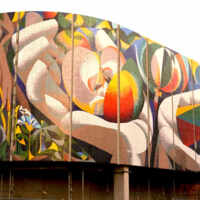
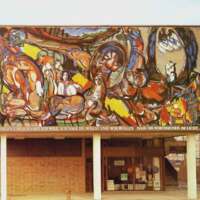
Religion was suppressed in the GDR, which replaced Christian ceremonies with secular socialist ceremonies like the Jugendweihe. As a result, East German public art does not contain religious symbols and, instead, has secular humanist themes. They are evident since Mensch (Human) appears in many titles of public art. In addition, East German public art also often celebrates science and nature, which secular humanism values.
Even several years after the GDR collapsed, former East Germany had the world's largest population of atheists, with double the population of atheists as the runner-up, Japan.
Nudity
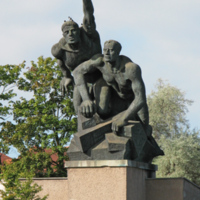
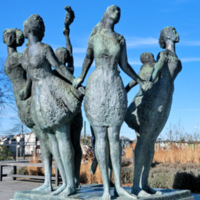
Non-erotic nudity features prominently in GDR public art. Public nudity had its roots in Germany's 19th-century naturist movement. It was part of everyday life in the GDR as Freikörperkultur. This Rostock monument honors the sailors' revolts during World War I. It portrays a serious subject, and the participants in this historical event realistically would have been clothed. The sailors appear nude as an artistic choice that reflects East German cultural values.
Friendship and Peace
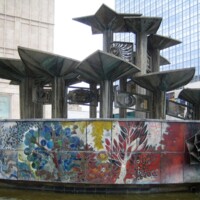
Friendship and peace between the GDR and other Communist countries, like the Soviet Union and China, appeared as a theme in propaganda posters in the early years of the GDR. Both of these fountains were completed in 1970, which is the same year that the first meeting between East German and West German leaders occurred.
Nature
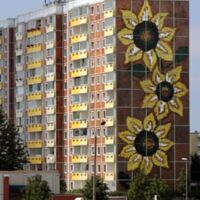
Nature as a theme in public art reflects both Germany's 19th-century naturist movement and the GDR's suppression of religion in favor of secular humanism.
Technology
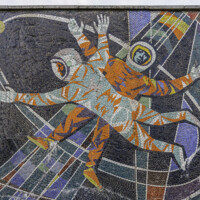
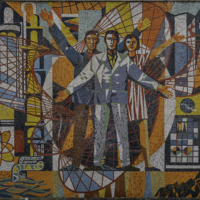
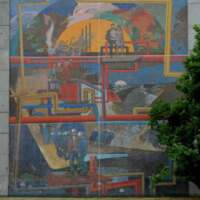
GDR public art celebrates technological advancements as human accomplishments to take pride in. These mosaics and murals reference technology, atomic energy, electricity and space flight.
Workers and Industry
GDR public art honors workers and industry, important aspects of Communist ideology. In addition, socialist realism dictated that art must be for the workers and easily understandable to them.