

Kunst am Bau
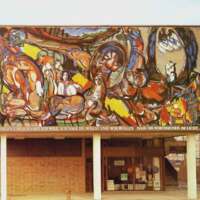
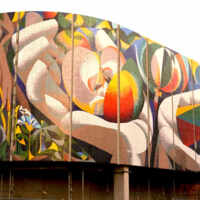
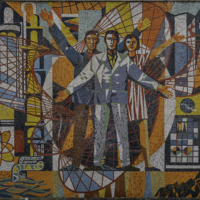
Kunst am Bau means "art on buildings." Its tradition in Germany dates back to the Weimar Republic in 1919. However, in the GDR it was called "baubezogene Kunst" (building-related art), perhaps to distinguish it from previous administrations and West Germany. This term is still used to refer to art on buildings from the GDR era. Kunst am Bau is used here because it is easier for English speakers and also refers to art on buildings in unified Germany.
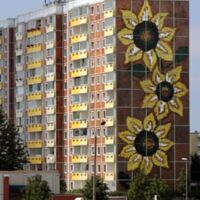
On August 22, 1952, the GDR issued the “Order on the Artistic Design of Administrative Buildings,” which stipulated that commissions of 1 to 2% of the planned construction costs must be awarded to visual and applied artists to decorate the buildings and grounds. This public art was required to be in the socialist realist style. Beginning in 1959, a similar policy was applied to buildings constructed for housing. 0.2% of the planned construction costs must go toward visual and applied arts. It was later expanded to 0.5%. These policies are responsible for the proliferation of Kunst am Bau in the GDR, including apartment complexes with elaborate murals.
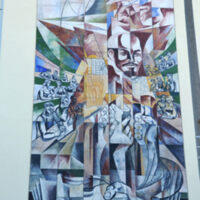
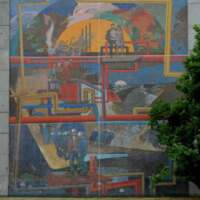
East German Kunst am Bau consisted of East German modernist decorative architectural elements and pictorial representations. East German artists used traditional artistic techniques and mediums like stone relief, ceramic relief, fresco painting, mosaic tile, bronze casting and metalwork. The German word "Wandbild," meaning mural, often refers to all pictorial representations on a wall or other building surface and includes painted murals, frescoes, mosaics, street art and stained glass.
During the construction boom in the GDR during the 1960s, public art commissions expanded the range of accepted themes. As a result, pictorial representations on buildings became more popular, more colorful, and expanded on traditional socialist realism. However, plants and geometric designs also remained popular.