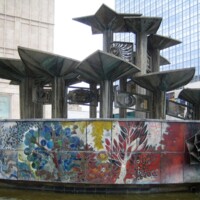
Walter Womacka
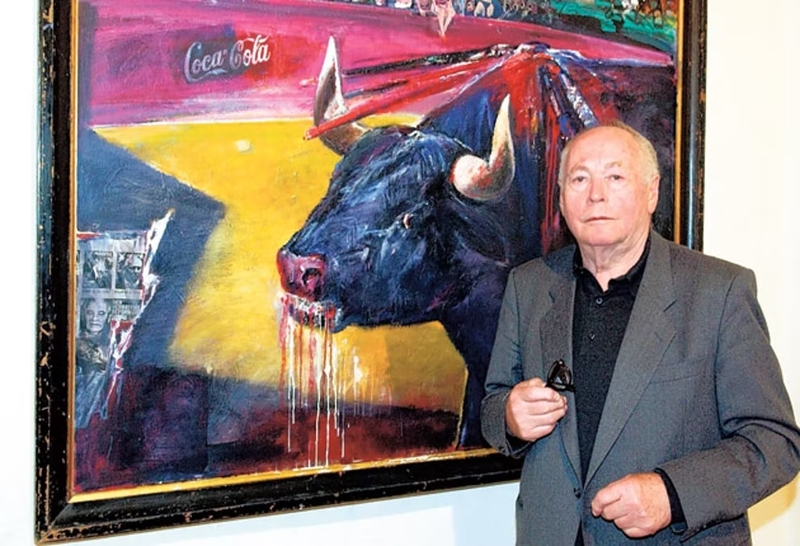
Walter Womacka
"I was truly at home in the GDR. This is why I shall always defend it, despite its inadequacies and all its flaws."
Womacka received more state commissions than any other artist working in the GDR and achieved international success through his painting Am Strand. He is the best-known East German artist. He loved the GDR until the end of his life.
Walter Womacka was born on December 22, 1925 in Obergeorgenthal, Sudetenland, now Horní Jiřetín, Czech Republic. However, he lived in East Berlin for most of his life. He trained as a painter before being conscripted into military service in 1943. He was wounded in World War II. Between 1946 and 1951, he studied art in Braunschweig, Weimar, and Dresden.
In 1953, Walter Womacka moved to the Kunsthochschule Berlin-Weißensee , where he worked first as an assistant. In 1963, he became head of the painting department. Georg Baselitz was one of his notable students. In 1965 he was appointed professor. In 1968 he became rector of the university and remained in this position for 20 years. During his tenure as rector, at least 40 students were expelled for political reasons. In 1968, he also became a full member of the GDR Academy of Arts. From 1959 to 1988, he was the vice president of the Association of Visual Artists of the GDR. He was a loyal SED party member and received significant support under Walter Ulbricht’s leadership. From 1969 to 1971, Womacka was a member of the SED district leadership in East Berlin.
In his autobiography, he justified the Berlin Wall stating, “This wall was ugly but necessary. And she made sure in her own way that there was peace.” He consider the 41 years of the GDR the greatest time of his life and lamented the destruction of his public art on GDR ministry buildings. He died in 2010.
Art by Walter Womacka